*This report is split into two posts due to character limits
Post 1/2
Initial Clarification: Most of the Snapshot data used to be taken from the VeloraDAO governance dashboard developed by SEEDGov. Unfortunately, in mid-August the solution Snapshot was using to upload data to Dune was deprecated, meaning a new script needs to be coded to continue feeding data into Dune. As this has not yet been implemented by Snapshot, so the data up to mid-August is sourced from these dashboard, while from that point onwards it has been manually collected by SEEDGov from VeloraDAO Snapshot Space and incorporated through editing into the charts to graphic the relevant data.
This document represents the second quarterly report we committed to presenting to the DAO as part of our role in the Velora Governance Task Force, with the goal of providing insight into the DAO’s overall state and participation.
To that end, we will begin by analyzing the starting point — the condition of the DAO prior to our full involvement in October 2024. We will then review an intermediate stage, from October 2024 to March 2025, during which we acted as delegates, then the first GTA quarter from April to June 2025 -a period covered by our first quarterly report-, and finally examine the period from July 2025 to the present. We will highlight the evolution, activity levels, participation, and overall condition of the DAO.
In our comprehensive report titled “Driving Protocol Success through Optimized Governance”, published on November 10, 2024, we stated the following: ‘DAOs face significant challenges, such as lack of participation, apathy among token holders, organizational difficulties, and the tendency to become slow and inefficient structures, and ParaSwapDAO is no exception’. In that report, we conducted a detailed analysis of several DAO metrics, all of which revealed that the then-ParaSwapDAO was going through a period of very low activity—almost stagnation—with very few proposals or debates. Nearly all participation efforts were being driven by the Foundation and Laita, who were behind almost every initiative.
Let’s now look at concrete numbers and how they’ve evolved since then:
1.- Proposals
This metric is particularly relevant to us, as proposals are the lifeblood of a DAO. They reflect that community members are actively submitting governance initiatives, engaging in discussion, and ultimately putting them to a vote. This is the purest expression of a DAO: generating ideas, debating them, and collectively deciding on actions that will impact the DAO and/or the protocol.
Since the inception of the DAO until November 2024, a total of 68 proposals have been voted on over approximately three years, averaging 1.8 proposals per month, consistent with the scale of ParaSwap:
- 2021 (November and December): 11 proposals - Average of 5.5 proposals per month
- 2022: 22 proposals - Average of 2 proposals per month
- 2023: 29 proposals (the year with the highest activity) - Average of 2.4 proposals per month
- 2024 (until November): 6 proposals - Average of 0.6 proposals per month
- From November 2024 to March 2025: 10 proposals - 2 proposals per month
- From April 2025 to June 2025: 14 proposals - 4.66 proposals per month
- From July to September 2025: 11 proposals - 3.67 proposals per month

These metrics show that since our involvement in the DAO, during the period from November 2024 to March 2025 (with an average of 2 proposals per month) the DAO quickly reversed the near-paralysis it had experienced during the earlier part of 2024, which averaged only 0.6 proposals per month. This shift brought proposal activity levels closer to those of 2023, which had been the DAO’s most active year to date, averaging 2.4 proposals per month.
Furthermore, during the first quarter since we assume the role of Governance Task Force (GTF), between April 2025 and June 2025, these metrics have shown meaningful growth, reaching an average of 4,66 proposals per month.
During the July–September quarter, a total of 11 proposals were voted on, averaging 3.67 per month. This level of activity remains consistently higher than in the November 2024–March 2025 period and well above earlier levels and confirms the sustained high activity the DAO has shown since late 2024, which further intensified starting in April 2025, demonstrating that the DAO is consolidated, healthy, and active.
2.- Voters
The number of individual voters (addresses) has steadily declined since the inception of the DAO:
- First 10 votes: Average of 708 addresses
- From November 2023 to October 2024: Average of 160 addresses
- From November 2024 to March 2025: Average of 67 addresses
- From April 2025 to June 2026: Average of 57 addresses
- From July to September 2025: Average of 49 addresses

These data reflect the shift in the DAO’s participation model from a highly atomized structure of direct involvement by many tokenholders with low voting power, to one where professional delegates now play a central role.
Many token holders have chosen either to step back from direct involvement or to delegate their voting power to experienced and dedicated delegates. While direct participation from token holders is positive and desirable, it has become increasingly rare in practice. In contrast, professional delegates have proven to offer a more balanced and stable governance approach, often bringing technical expertise, consistent involvement, and a long-term perspective—unlike individual holders who may be driven by short-term incentives.
This shift has been instrumental to the growth of VeloraDAO, enabled by the successful launch of the Delegate Program Trial Period and later the 6-month *Delegate Incentive Program* that ended in August, which provided the foundation for a more professional and reliable delegation system —you can read the final report on the Cyclle 1 of the Program here—, and which we hope will be consolidated with Velora Contributor Program (VCP) Cycle 2, recently launched in September. The effectiveness of this model is further reflected in the following section, where we analyze the sustained growth of voting power in the DAO’s decision-making process.
We note that the last vote had the participation of only 30 voters, a significantly lower numbers than usual, which dragged down quarterly average. However, we believe this may be explained by the fact that the vote took place just a few days after the migration from PSP (sePSP1 and sePSP2) to VLR (and seVLR) voting tokens, meaning that many tokenholders and stakers had likely not yet migrated their positions and therefore did not qualify to vote. We will continue to monitor this metric in the coming weeks and months to assess how the migration progresses and how it impacts participation in future votes.
3.- VP (Voting Power - PSP Voter)
The amount of tokens used for voting has increased over time. Since the implementation of the PSP 2.0 system in February 2023:
- First 10 DAO votes: Average voting power of nearly 76 million PSP
- From November 2023 to October 2024: Average voting power of nearly 139 million PSP (83% increase)
- From November 2024 to March 2025: Average voting power of nearly 325 million PSP (134% increase)
- From April 2025 to June 2026: Average voting power of nearly 394 (21% increase)
- From July to September 2025: Average voting power of nearly 364 **(7,5% decrease)

Voting PSP has shown a consistent upward trend since the DAO’s inception, with a noticeable dip in participation during Q1 2024 that was subsequently reversed. Since November 2024, PSP participation has recovered significantly, growing by over 130%, with further growth by over and additional 21% observed in the first quarter since we assumed our role as GTF between April and June 2025. The July–September quarter shows a slight decrease of nearly 7,5% compared to the previous quarter. However, activity remains at very similar levels, clearly higher than those recorded before April 2025, and still much higher than those observed prior to November 2024.
A closer look at the chart above, combined with that of Proposals Over Time, not only confirms this exponential growth but also reveals four distinct phases in the DAO’s voting PSP participation.
-
Phase 1 (November 2021 – February 2023):
This early stage was marked by very low PSP participation, but high numbers of individual voters. This suggests that many retail users, each holding small amounts of tokens, were actively involved in governance, though total voting PSP remained low.
-
Phase 2 (February 2023 – January 2024):
A period of steady growth in voting PSP, increasing from around 55 million to 251 million. Combined with an increase in governance proposals, this indicates a DAO that was expanding in both activity and engagement.
-
Phase 3 (January 2024 – October 2024):
This phase reflects the previously discussed stagnation period. Both proposal activity and voting PSP sharply declined. This decline was not coincidental—the DAO’s inactivity led to growing apathy among token holders, creating a vicious cycle of disengagement.
-
Phase 4 (November 2024 – Present):
In this most recent phase, the DAO has experienced a strong resurgence, with record highs in both proposal activity and voting PSP. The prior vicious cycle has been replaced by a virtuous one: more proposals, deeper debate, and significantly higher PSP engagement in decision-making processes.
The observation of this graph also confirm that the previous ceiling of PSP token participation in votes during 2024 —around 300 million PSP, which was a historical record until November of that year— has become consolidated as the floor of participation. This significantly higher presence of voting PSP is highly positive for the overall health of the DAO for multiple reasons:
- Greater legitimacy and representativeness in decision-making.
- Greater security and resilience against potential capture attempts or governance attacks.
- Greater accountability, control and alignment of interests over the proposals debated and voted on.
- Fostering engagement and a sense of community.
- Community maturation key for the long-term stability and evolution of a DAO.
- Attraction of new stakeholders that an increase new opportunities.
In short, the new consolidated floor of PSP participation not only improves the quality and legitimacy of decision-making, but also represents an institutional shield and a clear sign of the resilience and maturity the DAO has achieved.
4.- Forum Activity
An equally important indicator of the DAO’s progress is the noticeable increase in both the activity and quality of discussions on the governance forum. While this may seem like a subjective observation, it becomes evident when reviewing current threads: there is a clear rise not only in the number of contributions but also in their depth and constructiveness.
We now see more thoughtful and well-rounded conversations, with extensive constructive feedback and actionable suggestions that often lead to revised proposals. These improved versions tend to reach Snapshot with greater clarity, robustness, and broader consensus than the initial drafts. These reflect a DAO that is entering a more mature and active phase, not only in terms of proposal volume but also in its quality and sophistication of governance discussion.
5.- PSP staking
By mid-to-late September, the total PSP staked amounted to 398.7M, distributed as 352M on Ethereum and 46.7M on Optimism. Over the last two and a half months, the total PSP staked decreased by 43.5M, representing a 9.8% decline. Breaking it down by chain: on Ethereum, it fell from 396.4M to 352M (a 9% decrease), while on Optimism it increased from 45.7M to 46.7M, showing a modest 2.2% growth.

Source: ParaSwap PSP 2.0 General Metrics
Regarding unique stakers, the total number stood at 4,032, evenly distributed with 2,016 on Ethereum and 2,016 on Optimism. This represents a decline from 4,160 to 4,032, a 3% drop overall. On Ethereum, the number went from 2,069 to 2,016 (–2.5%), while on Optimism it decreased from 2,071 to 2,016 (–2.6%).

We understand that these results, taken in mid-to-late September, are not fully representative of the current situation, as Velora and its tokenholders/stakers are in the midst of the migration process to the new VLR token and the new seVLR staking, while the previous sePSP1 staking is being deprecated and Base has been introduced as a new chain for holding and staking VLR. It will take some time for this migration to be completed or at least more advanced, and for us to be able to accurately assess the outcome of the process and the new composition of VLR staking.
6.- DAO Structure
In November 2024, the DAO had a minimal structure:
- GovCo was the only existing structure, centralized in nature, and had a relatively minor role: overseeing the Ethereum Fee Claimer wallet and executing the fee distribution and gas refund, as well as approving emergency proposals for PIP qualification.
- The calculations for fee distribution and gas refunds were done manually, with the responsibility falling on the ParaSwap/Velora team. This not only added to their workload but also carried the latent risk of human error due to the manual nature of the process.
- There were no other structures in place.
- While Snapshot was enabled, there were no delegates formally introduced on the forum, nor were there any participating or reporting on their activity.
- The DAO community was limited to the Paraswap team at the time and a few individual contributors acting without coordination.
By March 2024, the reality of the DAO had changed significantly:
- 18 formally introduced delegates on the Delegation section of the forum, 17 of whom had varying degrees of considerable activity and only 1 inactive. 12 joined during the successful Delegate Program Trial Period, and the remaining 5 joined in March during the next phase of the DIP. Of the 18 delegates, 9 were active participants in the DIP.
- The Cycle 1 of the Delegate Incentive Program had just been approved and launched after a successful test.
- A DIP Program Manager was formalized, responsible for the program’s operational tasks and for providing the community with public reports on its performance.
- Approval of PIP-55 to develop an automated fee and gas refund distribution mechanism.
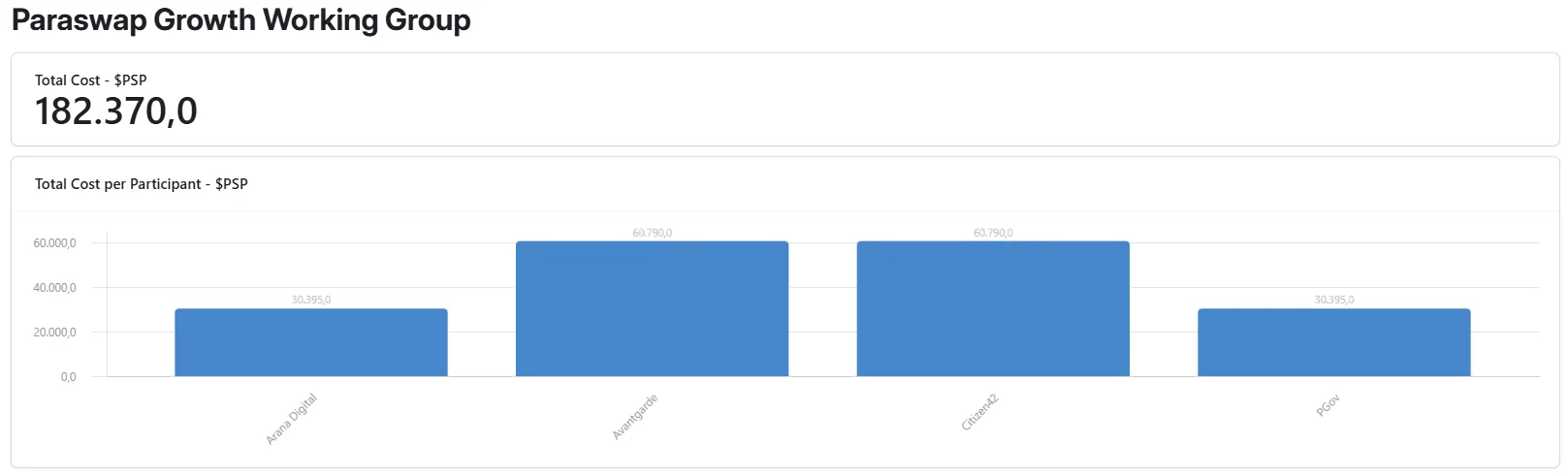
- The creation of the ParaSwap Growth Working Group (PGWG) as a temporary DAO structure.
From April to June 2025, even within a short period, this trend toward greater maturity and structuring of the DAO deepened:
- 2 new delegates joined, bringing the total to 20 formally presented delegates on the forum, 19 of them with varying levels of participation and only 1 inactive. 14 of them participated in the DIP.
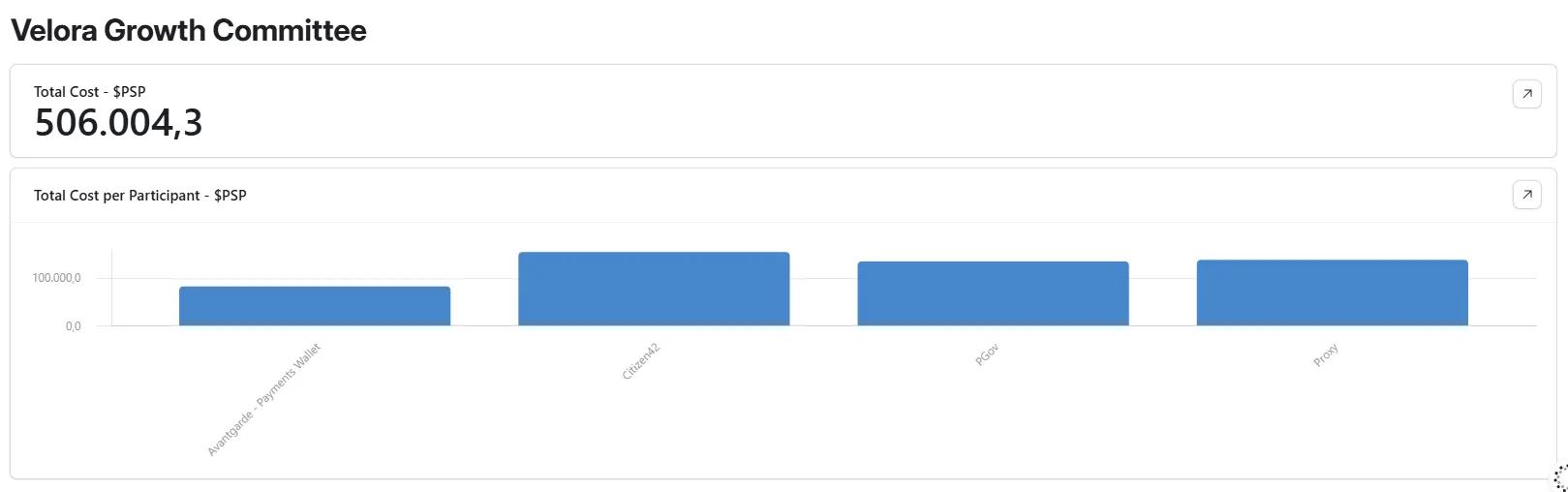
- Creation of the Velora Growth Committee (VGC) and the launch of its 6-month first season as a structure with the potential to become a permanent DAO body, contingent on the success and impact of the experience. The committee has 5 participating members, along with representation from Laita.
- Formation of the Governance Task Force, tasked with facilitation, coordination, and overall DAO management.
- Formalization of Laita as DAO service provider to perform marketing facilitation, infrastructure and developer support tasks. Presentation in the forum of updates on its activities, increasing transparency in the DAO.
- Successful automation of the fee and gas refund calculation and distribution mechanism.
- Deprecation of GovCo and decentralization of both multisig management/signing responsibilities and emergency proposal PIP qualification—now handled by various DAO contributors through a public, structured, and predictable selection and onboarding process.
From July to August 2025, although once again a short period of time, significant progress was made in further structuring and managing the DAO in a more mature and professional manner:
- Formalization and activation of a decentralized and transparent multisig authority composed of 8 members (5/8 threshold), including service providers and delegates, to manage a total of 11 DAO safe wallets across different blockchains.
- Development and presentation of the VeloraDAO Expense Dashboard as a transparency tool to track all DAO expenses.
- Formalization of the Velora Treasury Manager to manage, activate, optimize, safeguard, and sustainably grow the DAO’s treasury, under an appropriate framework that clearly defines and limits its functions and responsibilities.
- Strengthening of the delegate program towards a cycle 2 that will aim to achieve delegates act as genuine contributors to the protocol’s success.
- The Velora Growth Committee (VGC) created and presented the Velora Community Mirror, where numerous pieces of content generated by VGC members and other delegates have been submitted, as a tool for the DAO to support Laita’s efforts in content generation and promotion of Velora.