PIP-XX: Discontinuing the Gas Refund Program

PIP-XX: Discontinuing the Gas Refund Program

Authors

WakeUp Labs

Abstract

This proposal suggests discontinuing the Gas Refund Program to simplify operations, maintain a healthier treasury, and reinforce VeloraDAO’s long-term sustainability. The funds previously allocated to gas refunds would remain in the DAO’s treasury,

Motivation

Since PIP-55, the Gas Refund and Reward distributions have been automated and executed transparently through oSnap + UMA. In addition, simplification changes have already been implemented so that only the gas consumed on Ethereum Mainnet, the only network with significant cost impact, is eligible for refunds.

However, analysis of recent epochs shows that:

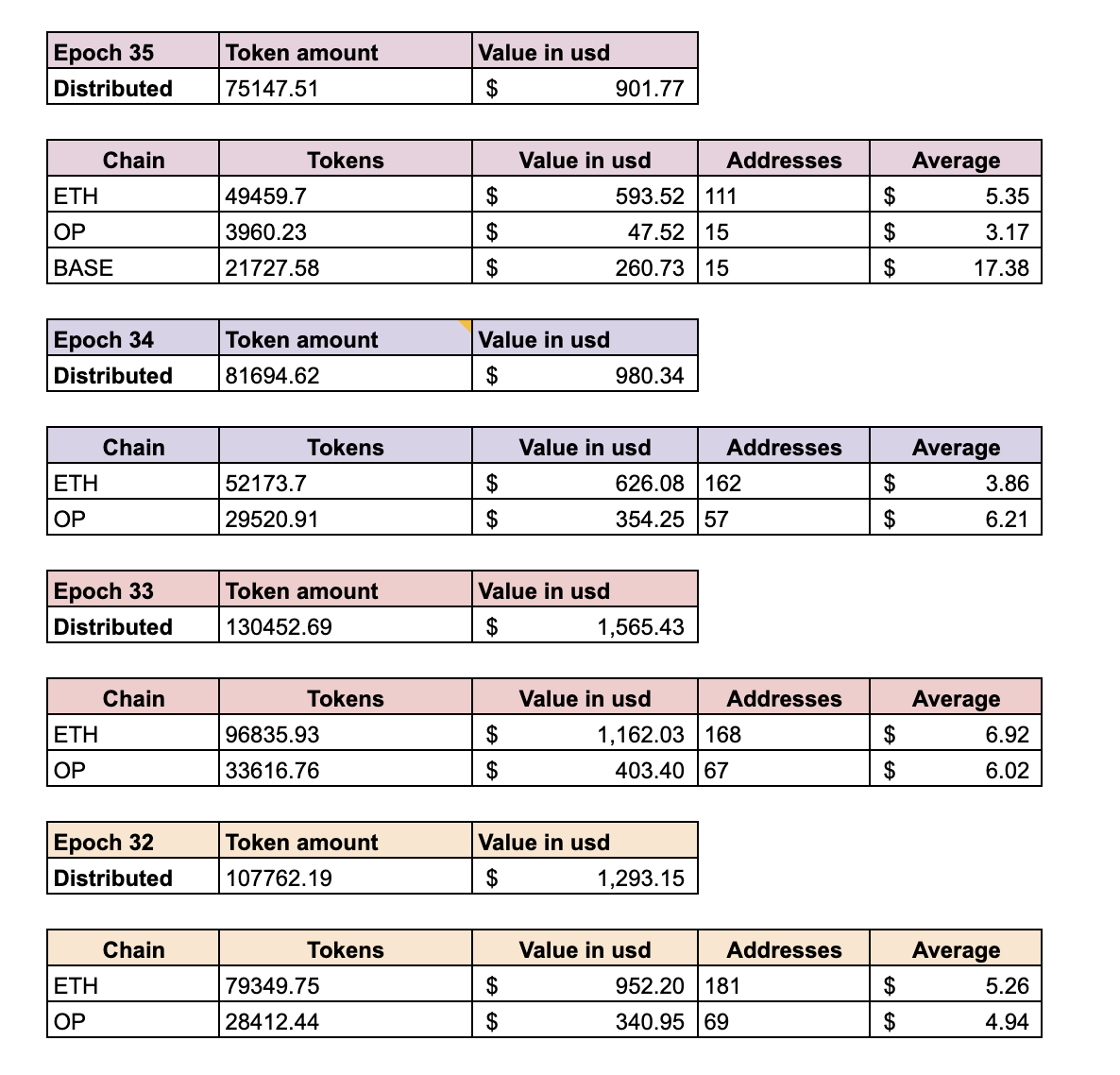
  • Refunds represent a very small financial impact (≈$1K total per epoch).
  • The distribution is highly fragmented, roughly $300 per chain, across ETH, OP, and BASE. (The gas refund program is claimable in the one with your biggest stake).
  • Execution requires the same multi-step operational flow (scripts, validation, risks, signers) as the much larger Reward Program.

Given these factors, the cost-benefit ratio of maintaining the Gas Refund Program has become unfavorable.

Data Reference

  • Past Gas Refund distributions are publicly verifiable on Snapshot under the Reward & Gas Refund proposals.

  • Historical average refund volume: ≈1,000 USD / epoch.

  • Last 4 Epochs Data:

Means & Budget:

No extra budget needed.

Implementation Overview:

Handled by WakeUp Labs under the existing Reward Mechanism Automation (PIP-55) framework. No new contracts or tools are required, only some adjustments.

Time of Implementation:

We’re introducing these changes now so that, if agreed upon after the discussion, they can take effect before Epoch 37’s distribution.

Expected Impact

  • Simplified operations (one proposal per epoch instead of two).
  • More funds in the DAO treasury every epoch.
5 Likes

Strongly agree with this — we could definitely use these funds more efficiently to have a greater impact on the product or the DAO.

3 Likes

Since the introduction of the GRP, the landscape has changed a lot. There are many more chains, Ethereum has scaled a lot more, and Delta is now an alternative for people wishing to save on gas.

Agreed that this is a reasonable suggestion, the VLR would be better used for other intiiatives!

3 Likes

Thanks for putting this proposal together. It makes total sense given the relatively small payout size versus the operational overhead.

That said, I have a few follow-up questions and would like to better understand the implications:

  1. Do we have a breakdown of how many users were actively claiming refunds and what share of them were smaller vs. larger participants? This might help confirm whether the impact of removing the program will indeed be minimal.

  2. Since the program targeted Ethereum mainnet transactions, would there be any merit in retaining a limited refund scheme for higher-cost actions, or is the overhead still too high to justify even that?

  3. Are there plans to redirect the saved budget toward other forms of user incentives or community initiatives that might deliver higher engagement?

Overall, this feels like the right move toward more operational simplicity and better capital efficiency, and I appreciate the clear rationale laid out here.

In full support of this proposal as it is indeed hard to justify the operational overhead for such a minor sum. Thanks for bringing this forward @WakeUpLabs, nothing to add really. We will vote in favour.

3 Likes

I’m in full support of this, it’s a sensible and operationally efficient step forward.

The gas refund program made sense in earlier stages and gas was a pain point but with Delta and all EIPs happened and ongoing, “cheap gas and gasless” is here, plus oSnap, UMA now running smoothly, the additional layer reeally feels redundant.
The data makes it clear, low dollar amount per monthly refund, fragmented across chains, while requiring the same multi-step operational flow as the main reward program definetly makes it a poor cost-to-effort ratio,
The saved operational time is worth far more than the small refund amounts being distributed so easy For, as of me to!

2 Likes

Thank you @WakeUpLabs, we support this proposal.

The Gas Refund Program (GRP) was originally launched in early 2022, at a time when the context was completely different. Back then, gas costs on Ethereum were significant, and the GRP served as a useful mechanism to incentivize protocol usage by refunding users part of those high gas expenses.

Today, the situation is entirely different. Network upgrades have drastically reduced gas costs on Ethereum, while on Base and Optimism , gas fees are extremely low, almost negligible, and no represent a relevant factor in transactions.

According to the data provided by Wakeup Labs, the average gas refund per user is now around $5 per epoch , with a total budget of about $1,000 or less distributed among roughly 200 wallets.

What was once an effective incentive for protocol usage has become an operational inefficiency, where the cost and effort of execution far outweigh the benefits.

We therefore support discontinuing a program that once fulfilled its purpose but no longer makes sense under current conditions.

I’m against discontinuing the Gas Refund Program, while the effort seems to be excessive for the amount of VLR distributed due to the refund program; this is likely just temporary as DeFi on chain has died down due to the launch of a new L2 every few weeks/months which obviously isn’t sustainable and the ‘meta’ will eventually die out.

I firmly believe that continuing the gas refund program will be beneficial for the Velora DAO & overall product and highly discourage the discontinuation of the gas refund program.

EDIT: Upon further research, while the overhead claimed by WakeUp Labs is deemed to be excessive by their standards; it’s important to note that the DAO spent 35,000 USD building the reward automation while only being in use for ~10 months, as well as the fact that we’re only being charged 0.75% to keep the program running (~$7.50) however if we choose to reinstate it down the line, It will likely cost a reduced sum but significantly more then it will be to keep the program running during less active times.

I highly urge @Avantgarde and @SEEDGov to reconsider their decision as well. It simply doesn’t make sense to discontinue at this stage.

Cheers.

In full support of this. The gas refunds were in place for a while and we believe helped spur trading activity. However, as the protocol matures, there is no reason to continue into perpetuity and this should not be the expectation. Maybe a slow tailor down of incentives could make sense?

1 Like

I support this proposal. I believe the Gas Refund Program is no longer relevant in the current context. Ultimately, it requires significant effort for minimal benefits to the DAO and its users.

That said, I think it was valuable to have this program in place and fully operational for an extended period. I hope that, should a high-gas environment re-emerge in the future, the DAO could reactivate it with relative ease.

1 Like

Thank you @WakeUpLabs for presenting a clear and data-driven proposal to discontinue the Gas Refund Program. We appreciate the detailed operational and financial analysis, as well as the transparency around historical refund volumes and the automation framework.

One area that warrants deeper discussion is the assumption that current low gas costs and subdued DeFi activity are permanent. If on-chain activity or gas prices rise again, would the DAO be able to quickly reinstate a similar refund mechanism, or would the loss of institutional knowledge and tooling make this difficult? Understanding the path to reactivation, should conditions change, is essential for long-term adaptability.

We echo @citizen42 and @SEEDGov’s recognition that the GRP’s original context has changed, but believe a robust discussion of future-proofing will strengthen the proposal and ensure the DAO remains agile in a dynamic ecosystem.

1 Like

Hi, @todayindefi, great questions

  1. Preliminary analysis of refund activity:
    On Ethereum — where gas refunds are most significant — there were 111 addresses eligible for Gas Refund Distribution #35.
    However, only 14 wallets interacted with the claiming contract (0x945229af4d1fff9f51d1c8e9f62fe03bb4db706c), meaning that just ~12.6% of eligible users actually claimed their refund.

    This low participation rate strongly suggests that removing the program would have minimal impact on most users, especially if the majority of claimants are small participants.

  2. Even if it were limited to higher-cost actions, it wouldn’t make much sense. As a DEX aggregator, our core function is already to optimize gas and route the most efficient trades, so there shouldn’t be many gas-intensive actions to begin with. Segmenting the refund program would likely create the same or even greater operational overhead, just to benefit a very small subset of users — most likely bots.

  3. We estimate annual savings of at least $15,000 USD from discontinuing the gas refund system.
    These funds could be reallocated to new initiatives — such as expanding Velora to additional chains, introducing staking incentive rewards, integrating Velora with new DeFi applications, or launching marketing campaigns aimed at strengthening and growing the community.

4 Likes

Hey @always_in_control, thank you for sharing your thoughts and for being such an active member of the community. We really appreciate your feedback. Several points you raised are valid and were also part of our initial considerations when drafting the proposal.

Many of the topics mentioned above were already addressed here: PIP-XX: Discontinuing the Gas Refund Program - #4 by todayindefi

First, the operational cost of maintaining the refund program is high compared to the almost negligible benefit it brings today.

From WakeUp Labs’ side, we’ve never taken 0.75% from the Gas Refunds — neither now nor in the past. That percentage has always applied to Rewards program in ETH.

The operational overhead isn’t related to the scripts or automations we built, but rather to the coordination required with multisigs to ensure that funds are available for each distribution.

With that in mind, we genuinely believe these funds could be better allocated. We invite you and the community to bounce around ideas that could strengthen the protocol.

For example, incentives for stakers, users or token holders, or create new interfaces that drive more volume, revenue, and transactions.

1 Like

Thanks for the proposal. I agree discontinuing the Gas Refund Program is a reasonable and well justified decision

The refunds represent a very small financial value, while the operational effort required to maintain the process is disproportionately high.

Simplifying this workflow will allow the DAO to save time and focus resources on higher impact initiatives or strategic projects.

Although the amount saved each epoch is minor, this change contributes to a healthier treasury and aligns with VeloraDAO’s goal of long term sustainability.

However, we should communicate this decision clearly to avoid misunderstandings that it’s cutting contributor benefits.

1 Like

Thanks for the proposal, and I also think that, while interesting from a marketing perspective and even financially relevant at launch, the current evolution of Ethereum mainnet (gas-wise) and the low cost of L2S make it not make sense to continue it.

1 Like

We support the proposal to discontinue the Gas Refund Program. The data clearly shows diminishing participation and limited financial relevance, with only around 12 percent of eligible wallets claiming during the last epoch. Still, this decision can be more than a cost reduction. It can be an opportunity to learn and improve how Velora designs and retires programs.

We believe the key question isn’t just what happened but why. Understanding whether low participation came from lack of awareness, low perceived value, or UX friction could help us create stronger incentive systems later. Gathering light feedback or analyzing claim transaction patterns could offer meaningful insights.

This could also be the start of a Program Sunset Framework where the DAO periodically reviews each initiative against measurable outcomes like user activity, ROI, or treasury impact. Embedding this process into governance makes cost reviews predictable and transparent rather than reactive.

Finally, while refunding gas once symbolized giving value back to users, we should communicate clearly how the freed funds will now support growth perhaps through staking rewards, integrations, or community incentives. That transparency helps maintain trust while keeping VeloraDAO efficient and adaptive.

1 Like

We concur with the consensus. The high operational cost for such a low-utility program is a clear drain on resources and we support this move to improve treasury efficiency in alignment with the DAO’s long-term sustainability goals.

1 Like

I support this proposal. The gas refund program has fulfilled its initial purpose, and discontinuing it now makes sense to optimize treasury use and focus resources on more impactful initiatives for protocol growth.

1 Like

Given the positive response from the community and the fact that all concerns and questions related to this topic have been resolved, we believe it’s appropriate to begin the Frozen Period.

4 Likes